 7 Comments 7 Comments
by Lesley Springall
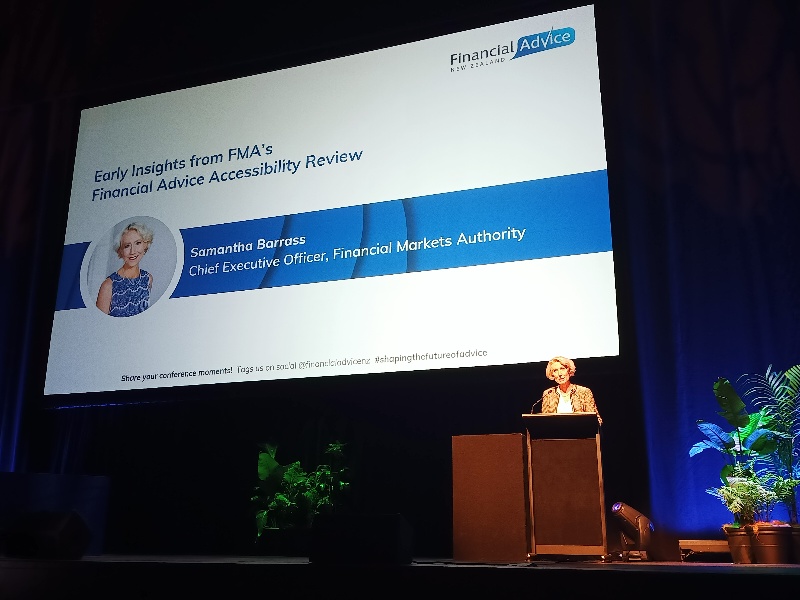
Releasing the findings of its Access to Financial Advice review at the Financial Advice New Zealand (FANZ) Conference in Auckland, FMA chief executive Samantha Barrass said the review revealed a range of structural, cultural and operational barriers across the advice landscape.
One key finding was that that many providers remain uncertain about how to tailor the nature and scope of their advice, she said. “The default is to be cautious and conservative, to use the six-step advice process each and every time… making advice less accessible, not more accessible.”
Improving access to quality financial advice is not just a statutory mandate for the FMA, it is critical to New Zealanders’ long-term financial wellbeing, stressed Barrass. So if providers are limiting their advice or being overly cautious because they are worried about falling foul of the FMA’s Code of Professional Conduct that is the exact opposite of what the FMA wants, she said. “One of the messages I want you to take from today, is that we encourage you to innovate and think differently, to introduce new advice journeys that tap into consumer groups who are currently underserved.”
The FMA’s Access review, conducted from July to December 2025, included national consumer research and more than 80 interviews with licensed FAPs, financial institutions, professional bodies, technology and education providers and other organisations supporting New Zealand’s financial advice sector. Released during the FANZ conference in two separate reports (consumer and financial advice sector insights), the review highlights both the challenges consumers face and the opportunities for the financial advice sector to better meet their needs, said Barrass.
Key findings in the consumer research showed 28% of New Zealanders accessed financial advice in the past 12 months, with people from lower socio-economic backgrounds and some ethnic groups, including Māori and Pasifika, significantly under-represented. Interestingly, the survey showed that younger people (37% of 18–29-year-olds) used a financial adviser more in the last year than people aged over 60 (17%) or 50-59 (21%).
Many consumers also reported uncertainty about what financial advice is, how to access it and how much it costs, with perceptions around affordability a key barrier highlighted by both consumers and advisers. Accessibility challenges are particularly pronounced for Māori, including a lack of culturally aligned advice models and tools, said Barrass, noting this remained an untapped opportunity for the sector.
There is also a significant gap in the advice available to support New Zealanders with retirement decumulation, she said. “This is where we continue to see real opportunity for the sector. There are currently just over 100,000 people over the age of 65 in KiwiSaver. There are another 200,000 people due to be able to access their KiwiSaver in the next few years. The profession can play a key part in helping Kiwis get the advice they need to make their retirement savings last.”
Innovation is key to increasing accessibility, said Barrass. “Technology-enabled and hybrid advice models, including digital tools and AI-supported advice processes, could make advice scalable and more consistent with the right design and oversight.” However, four out of five consumers still want face-to-face conversations when thinking about financial advice, she said. “New Zealanders want both digital accessibility and human connection. Technology can automate parts of the process that currently take advisers a lot of time, freeing them up to focus more on the human conversations that consumers value.”
The advisers’ review showed there was a lot of interest and an increasing uptake in technology, including AI, said Barrass. “But they also told us they want and need appropriate support, from a training and compliance perspective.”
In the next few months, the FMA will run a series of targeted roundtables to engage with providers and the wider sector to find practical ways to improve accessibility and ensure regulation supports innovation and good consumer outcomes, she said, adding that developing new advice journeys is critical to this.
| « Longwave aims to smooth the waters | Bond funds likely to deliver out-sized returns: Amova » |
Special Offers
Sign In to add your comment

© Copyright 1997-2026 Tarawera Publishing Ltd. All Rights Reserved
More detail needed!
No adviser wishes to 'innovate' on advice delivered, outside of technology advancements, due to the associated material business risks.