



NZX 50 navigates rising bond yields to end week higher
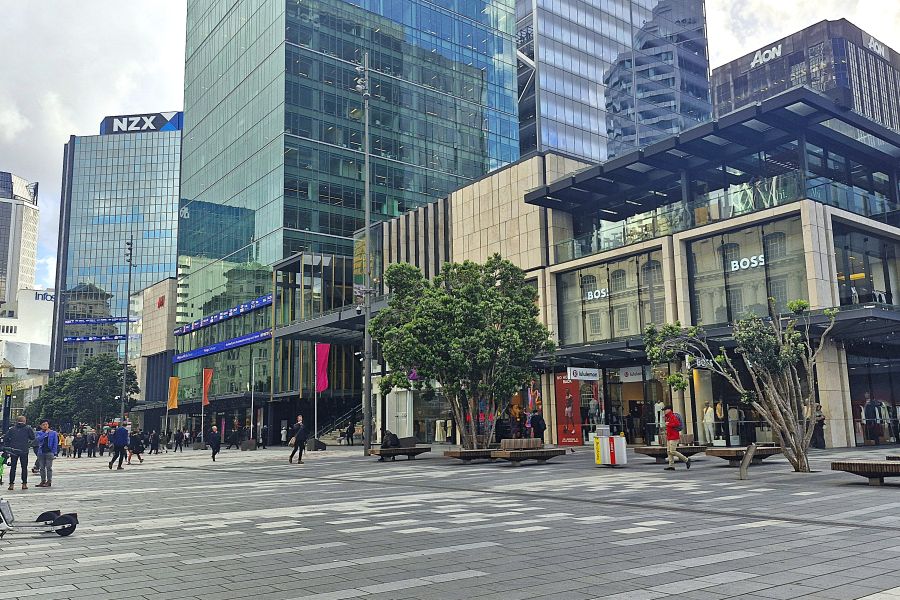
New Zealand’s S&P/NZX 50 index rose for a second week as a weaker kiwi buoyed exporters such as Sanford to help offset the impact of a groaning bond market as traders increasingly fret over interest rates being hiked to limit the inflationary impact of rising oil prices.
Serko posted the biggest gain for the week as the beat-up software firm recovered from a six-year low, outperforming fellow software firms Gentrack and Vista Group International, which were buffeted by rising rates pushing down tech valuations.
The NZX 50 ended the week on a sour note, dipping on Friday as the yield on New Zealand’s 10-year government bonds rose to its highest level since November 2023, knocking rate-sensitive firms such as Precinct Properties NZ, with the commercial landlord falling to its lowest level in more than 14 years.
And Heartland Group Holdings nudged higher after the financial services firm noted the Reserve Bank’s probe into TSB Bank’s prudential compliance.
Weathering the storm
The NZX 50 slipped 13.72 points, or 0.1%, to 13,811.11 on Friday, trimming its weekly gain to 0.5%. The kiwi dollar traded at 56.53 US cents at 5pm in Auckland from 56.75 cents yesterday, and was heading for a weekly decline of 1.1%, helping offset the yield on 10-year government bonds climbing 4 basis points to 5.11%.
Serko posted the biggest gain on the week, up 11%, while Vulcan Steel advanced 10% and fishing group Sanford advanced 8.9%.
“The Aussie and the kiwi dollars are really on the ropes – both currencies have been beaten badly,” said Peter McIntyre, an investment adviser at Craigs Investment Partners. “That’s a conundrum for the Reserve Bank as it’s great for exporters and for manufacturers, but it’s importing inflation.”
Rate-sensitive stocks were at the bottom of the leaderboard, with Gentrack sliding 8.4% and Vista declining 5.2%, while commercial landlord Precinct dropped 8% in its biggest weekly decline since March 2020.
In Friday trading, there were 21 declines on the NZX 50, 23 gainers and six unchanged stocks. The S&P/NZX 20 index slipped 0.2% to 7,604.4, while the NZX 20 futures contract was untraded.
Turnover across the main board was $112.6 million, of which Fisher & Paykel Healthcare accounted for $22.8 million as the country’s biggest listed company fell 0.2% to $45.
Property companies and firms held for their reliable dividends were among those weighing on the NZX 50 in Friday trading as the 10-year government bond rose to its highest level in almost three years, though was still below its US equivalent at 5.19%.
Precinct led the NZX 50 lower, falling 4.2% to 92 cents, its lowest level on an adjusted basis since April 2012, when it was still called AMP NZ Office. Spark New Zealand fell 2.5% to $1.93 and Meridian Energy declined 1.8% to $5.46.
AI tremors
Infratil slipped 2.1% to $14.30, joining a decline across Asia among companies tracking the artificial intelligence trade after Oracle’s move to protect itself against a delayed data centre in New Mexico reignited fears about the execution of the AI infrastructure build.
Asian markets were mixed amid the rising government bond yields, with Japan’s Nikkei 225 up 1.3% in late trading, while Australia’s S&P/ASX 200 index dipped 0.6% and Hong Kong’s Hang Seng dropped 1.6%.
Back in New Zealand, Vulcan posted the biggest gain on the day, up 4.3% at $7, while Serko advanced 3.9% to $1.33 after it said its chief financial officer Shane Sampson would depart in March.
Heartland rose 2% to $1.285 after the firm noted the Reserve Bank’s probe into TSB, and said it still supported the proposed merger, but that a material finding by the central bank’s investigation could let it back out of the deal.
Auckland International Airport was the most heavily traded stock on the day with a volume of 2.3 million shares changing hands, with the country’s major gateway up 1.8% at $8.55.
Outside the benchmark index, 2 Cheap Cars was unchanged at 87.5 cents as chief executive and controlling shareholder David Sena closed in on the 90% threshold needed to enforce mop-up provisions in his takeover offer at 90 cents a share. The company told shareholders at today’s annual meeting that car sales were down 2% in the first five months of the year, with revenue up 5% and gross margin widening.
Accordant Group was unchanged at 18 cents after chief executive Jason Cherrington announced his departure at the end of the March financial year.
Reporting by Paul McBeth.


![[Weekly Wrap] KiwiSaver in play; but outcome unclear](https://goodreturns.publit.io/file/c_fill,w_300,h_200/0ad582e4-c9a3-4692-bbe2-62d928f77fd2.jpg)