 2 Comments 2 Comments
by Sally Lindsay
There is no great benefit in sticking to floating, six- or 12-month rates for mortgage holders anymore.
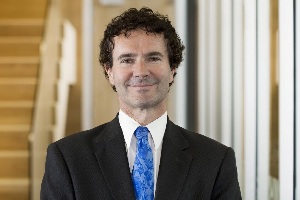
Independent economist Tony Alexander says the two-year rate of 4.99% from ASB, Westpac, BNZ and ANZ is attractive, and that timeframe is where most Kiwis fix.
Talking to Sharesies on its Shared Lunch podcase, While the short-term rates will come down a bit further as banks jockey for position in a market that has a low level of loan growth, do people need to hurry and fix at the 4.99% rate?
Alexander doesn’t see the upward leg of monetary policy cycle starting again until late next year or even 2027. “That is the next shift in the market in terms of thinking about interest rates.
“It’s all been about monetary policy easing in the past 18 months. Eventually it stops easing and the talk is it will be in the second half of this year.
“The market is not there yet but when it happens there will be some upward movement in the three- to five-year wholesale borrowing costs to banks and those corresponding interest rates rising. It is probably a story for next year.”
Alexander says most people being Kiwis will fix for two years. A few will jump in for three years, “Even when the five-year rate was at 2.99% in 2020-2021 hardly anybody fixed at that rate.
“However, with the uncertainty the world is living in with Trumpian politics, tariffs, wars andother geopolitical factors that could result in inflationary impacts means New Zealand just has to hang on for the ride.”
“Most people are going to be happy with a two-year rate fix and the difficulty will be interest rates could be rising again by 2027. If mortgage borrowers fix two years now because it seems attractive the rate is going to mature right when there is going to be upside risk of rates rising. It is going to cause problems.”
That is one reason Alexander was in favour of the three-year rate of 4.99% being offered by Westpac for two weeks. It has now withdrawn the offer.
He says it is unlikely to come back on the longer-term rates because the competition for the banks is in the two-year space.
There haven’t been fresh cuts to the three- to five-year fixed rates because the market had already factored in that the low point for the OCR is not going to be 2026 or 2027, it is going to be at the end of this year. “The RBNZ nearly validated what the market has moved toward, and most economists are now thinking the low point of the cycle has been reached for three- to five-year rates.
“For the two-year rate there could be a little bit more downside, but it will probably be limited.”
He says it is reasonable to expect OCR cuts of 25 basis points for each of the next two RBNZ reviews in March and April, but where he differs from expectations is the cash rate will only go down to 3.25% and not 3%.
“However, with the uncertainty the world is living in with Trumpian politics, tariffs, wars andother geopolitical factors that could result in inflationary impacts means New Zealand just has to hang on for the ride.”
| « Long-term interest rates not expected to fall much further | Kiwibank grows home loans at twice its market share » |
Special Offers
Sign In to add your comment

© Copyright 1997-2026 Tarawera Publishing Ltd. All Rights Reserved