


Investments
Buoyant economy, buoyant bond issuance
Wednesday 12th of March 2014
Key Points
- Against a backdrop of emerging market unease and patchy economic data globally, New Zealand’s buoyant economy was underlined by even stronger news and data releases.
- Long-term interest rates fell marginally, as global influences were the dominant influence.
- We retain the view that we are on a path towards stronger global and domestic economies, where there is the possibility of inflation rising above the very well contained levels experienced since the GFC.
- While market pricing is anticipating higher yields globally, we believe the risk is greater that yields rise further, rather than less than, yield curves imply.
- In March we will see the Reserve Bank’s interpretation of the economic outlook and the projected OCR path that aims to deliver 2% inflation. Governor Wheeler can be expected to take exceptional care to craft a message that gives rate guidance, retains flexibility and aims to reaffirm the Bank’s inflation managing credibility.
- It was a busy month for new issuance of corporate debt, with a total of $2,545m sold by 24 different issuers. We think this shows the NZ capital market to be in excellent shape and certainly stronger than was frequently suggested through 2013, when corporate bond issuance levels were lower.
- We think it is unlikely that the wave of new corporate bond issuance will force credit spreads significantly wider, but we do expect the sense of unsatiated demand to diminish. A mild re-pricing of credit to wider spreads would not surprise us.
- While emerging markets are grabbing the headlines, equity and credit markets are showing few signs of stress yet. An increase in risk aversion is a real possibility.
Late in February another round of strong economic data were released. The ANZ Business Outlook reached the highest level since 1994, Fonterra announced a further increase in their projected payout for 2013/14 to a new record level and monthly net migration numbers continued their strong trend, underpinning demand for housing. In the ANZ survey, expected profitability also rose to the highest level since 1994, and is most probably behind a rise in investment and employment intentions to levels also not seen for 20 years.
Chart 1. Consumer and Business Confidence
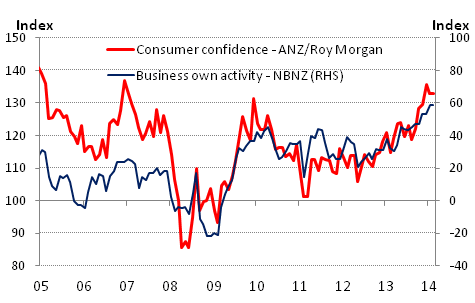
An additional and perhaps overlooked aspect of the better data is the rise in our Terms of Trade to a level not seen since the 1970s. BNZ economists suggest we may be experiencing the best Terms of Trade since any sort of records are available, in 1861. The income and ‘feelgood’ impact of this should not be underestimated.
The stronger activity signals are accompanied by higher inflation signals, with pricing intentions and inflation expectations rising.
Want to read the full article?
Click the button below to subscribe and will have free unlimited access for a limited time to full article and all other articles on the site.
You will also be able to comment on articles on Good Returns.
Latest News

4 min read


3 min read

3 min read