




The 'how' and 'why' of negative interest rates
In fact rates have gone so low that they are negative in many countries. In this commentary John Berry from Pathfinder looks at negative interest rates – in particular how central banks use them and what are they trying to achieve.
To understand how negative interest rates work it is worth doing a refresher on the yield curve. This charts the interest rates offered for investments (vertical axis) over time (horizontal axis). Below is the yield curve for NZ dollar term deposits with ANZ. An investor receives a higher rate for locking money away with ANZ for a longer term (3.60% p.a. for 5 years) than the investor receives for a shorter term (3.25% p.a. for 1 year). The ANZ curve is consistent with conventional thinking on how a yield curve should look – it is upward sloping and all of the interest rates are positive.
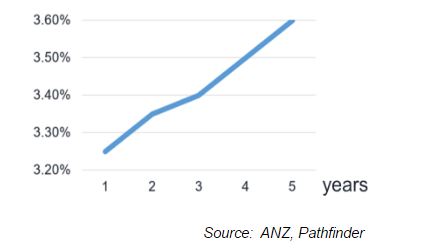
Something very odd has happened in recent times – interest rates have gone negative. Central banks have been eager to shift rates at the “front end” (shorter term rates) lower – until they have pushed them below zero. At a negative interest rate you pay a bank to hold your deposit and the bank pays you to take a loan. This is the opposite of how the world should be. Here’s how the “new” yield curve looks:
Click the button below to subscribe and will have free unlimited access for a limited time to full article and all other articles on the site.
You will also be able to comment on articles on Good Returns.



![[Weekly Wrap] KiwiSaver in play; but outcome unclear](https://goodreturns.publit.io/file/c_fill,w_300,h_200/0ad582e4-c9a3-4692-bbe2-62d928f77fd2.jpg)