




How global supply chain disruptions have caught out central banks in 2021.

2021 has seen a series of unusual price moves in many different asset classes, energy prices have soared, and of course crypto currency has been all over the place. But one of the most striking moves is the cost of shipping goods around the globe, which has essentially gone stratospheric in 2021. The Baltic Dry Index which takes into account 23 different shipping routes carrying coal, iron ore, grains and many other commodities, rose from circa 1,000 to over 5,500 over the course of this year. To put that in context that index has been calculated for over 35 years, since 1985, where it started at 1,000. Further context is that this year alone, the largest shipping company in the world, the Danish company A.P. Moller – Maersk, will generate more free cash flow, US$15 billion, than it managed to cumulatively generate in its previous 20 years of operations.
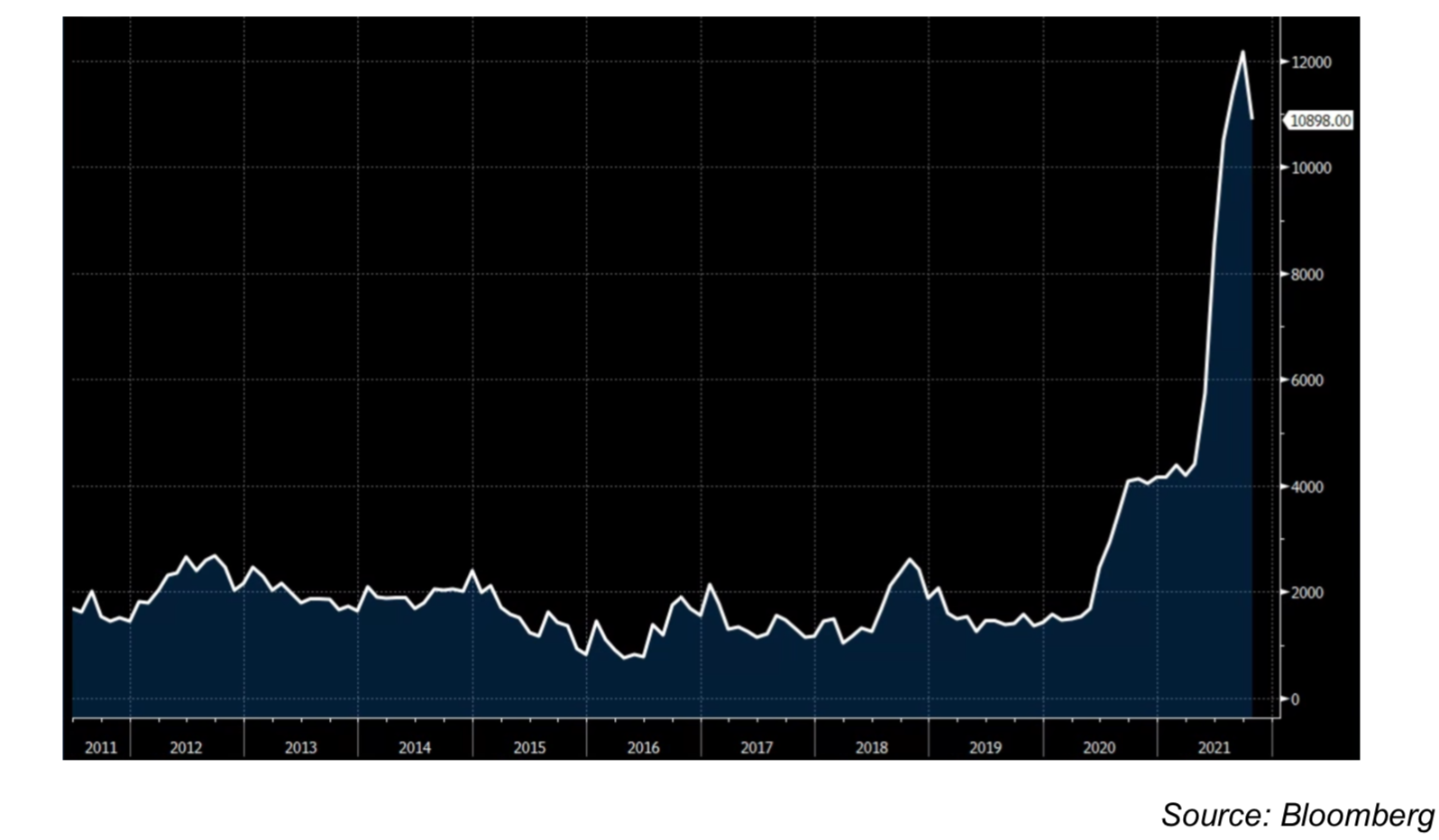
That surge in free cash flow generated by AP Moller – Maersk is a function of the rise in the cost of shipping containers as well as commodities. The index below is one of a series calculated by Drewry, a supply chain advisor, that tracks the cost of shipping containers across the major global routes. The one shown here tracks the cost of shipping containers from Shanghai to Los Angeles. It clearly shows that while 2020 saw an upside breakout from the previous range, as the cost per container rose above $2,500 for the first time, 2021 is when the price per container really soared, touching $12,000 per container.
Chart showing the cost of shipping a 40-foot container from Shanghai to Los Angeles
Click the button below to subscribe and will have free unlimited access for a limited time to full article and all other articles on the site.
You will also be able to comment on articles on Good Returns.


![[Weekly Wrap] KiwiSaver in play; but outcome unclear](https://goodreturns.publit.io/file/c_fill,w_300,h_200/0ad582e4-c9a3-4692-bbe2-62d928f77fd2.jpg)