

[GRTV] Increasing access to advice
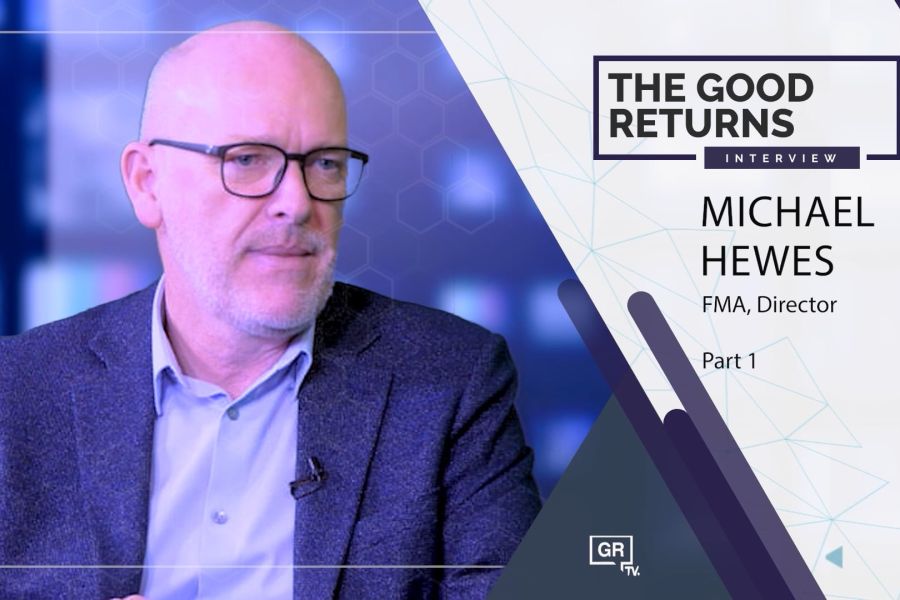
[Full Transcript] FMA Director of Deposit Taking, Insurance, and Advice Michael Hewes tells Good Returns TV what the regulator and stakeholders can do to increases access to advice.
Tuesday, July 14th 2026, 8:04AM
GRTV: Welcome to Good Returns TV. I'm Philip Macalister. Joining me in the studio today is Michael Hewes. Michael is the Director of Deposit Taking, Insurance, and Advice at the Financial Markets Authority. Welcome.
Michael: Kia ora. It's lovely to be back again. Thank you.
GRTV: It's good to have you back. We're really interested today — we're going to talk about the Access to Advice report, which came out a couple of months ago now. I know it's been really popular with people, with advisers. So my starting point — there were two parts to it.
One was a consumer perspective, and the other was an adviser perspective. I just wanted to start briefly with the consumer side. It was interesting that in the past 12 months, when the survey was done, only 28% of New Zealanders had accessed financial advice. I thought that number was really low, considering 60% of home loans are written through mortgage brokers, and you've got KiwiSaver and all these other things out there as well. So what's your take on that number?
Michael: Yeah, it's certainly an interesting number, and you're quite right. We split the report, so we had the consumer component and also the access to advice component as well. I think there's still a real challenge for consumers in what they actually consider advice. So certainly for us, when we focus on that number, it's one we're very keen to build on — obviously making sure advice is more accessible and more available. There's a lot to do around consumer education, obviously. But look, it was a pretty robust survey, and that's the number we arrived at.
GRTV: Yeah. And the other interesting part on the consumer perspective is the number one service consumers thought they got from advisers was budgeting advice, which I think advisers would be a bit shocked by. Why do you think that was?
Michael: Yeah, it's an interesting one. Again, I think it comes back to what a consumer's perception of advice actually is. Is there an opportunity, as we've heard from a lot of advisers, to provide a bit more of a holistic service? Certainly, consumers see advice as budgeting, and I guess it's our role — and industry's role — to show what other services advisers actually play, and the importance they play in consumers' lives.
GRTV: So what's the role of the FMA in getting that 28% number higher, and getting people to understand what advice is?
Michael: Look, as with everything we're doing with this thematic, we want to work very collegially, very collaboratively, with industry — it's not solely an FMA role. This is a role for advisers, and for industry associations as well. So we're working on a lot of our materials, and working very closely with some of the adviser associations to grow advice and access to advice.
GRTV: So if you think back to the original tenancy of the legislation — quality advice for more New Zealanders — I guess the question is also, can the FMA be proactive in promoting advice?
Michael: Yeah, look, we certainly have a role, but you also think of other agencies such as the Retirement Commissioner, which has an absolute key and pivotal role. It's not a core function of the FMA as such, but where we can certainly leverage and lean into is supporting advisers and supporting associations through some of our guidance, and certainly through this thematic — wanting to broaden the scope and opportunity to provide advice.
GRTV: Yeah. So one of the key things which came out of it from an adviser perspective is around this thing which you call nature and scope.
Michael: Yep.
GRTV: And I think one of the things which came through in the survey is that while it seems as though that's something advisers are struggling with, and it seems to be taking up a lot of their time, the adviser regime we have at the moment is good — and it's probably better than people expected it was going to be if you'd asked them three or four years ago. They're spending a lot of time on compliance and regulation, because we've got all these different laws now. And the outcome of that is they're not giving as much advice as they'd like to be giving — they're tied up with compliance. So what can the FMA do there to make that burden easier?
Michael: Yeah, look, good question. So one of our observations is we've undertaken quite a lot of significant supervisory activity, ranging from some of the larger deposit takers to some of the larger FAPs. Certainly one of our observations was that, in some ways, it's easier not to give advice than to actually give advice.
So it's about making sure your scope is actually right-sized for the product or the advice you're wanting to provide. Certainly during the thematic, and some of the post-work we'll undertake across the broader advice community, we're working with advisers. Do we need to provide more case studies? Do we need to release some better guidance? How can we make sure advisers themselves are comfortable providing advice? I think they called it right-sizing nature and scope — and that's something advisers are struggling with.
GRTV: So what's your solution to helping them right-size?
Michael: Yeah, sure. So certainly, one of our initiatives over the last couple of years is that we've actually launched a financial advice forum. You may recall we went out to the marketplace and asked advisers to come and join us so we could do some early testing and modeling on some of the solutions we're proposing.
We've heard quite loudly and clearly that case studies are a great example — we reflect back on the financial advice thematic we released a couple of years ago, with our observations. That report had a lot of case studies and exemplars, where we saw some great opportunities for advisers to build on what other advisers were doing. So I think a lot of our role is actually going through and supporting advisers, and supporting those associations, with what we see.
GRTV: So the bit which I had a little difficulty getting my head around — as you know, there's been a message put out when this was released about encouraging advisers to be innovative and do new things, and look at how they do this sort of nature and scope stuff. But then I would've thought they'd also be a little fearful of doing that if they didn't know it was going to tick all the boxes with the FMA. How do they get comfort that if they're being innovative, they're not going to get into trouble with you guys?
Michael: Yeah, look, we've taken a lot of approaches here. If you reflect back, last year we launched a sandbox. A lot of that sandboxing was around innovative approaches. So on a near daily—
GRTV: But that wasn't so much advice, was it? That was more sort of product.
Michael: No, there was product, but there was also advice. I spoke recently at a conference about our strong encouragement to advisers — we engage with advisers on a near daily basis with some tech tools, with AI tools. While we can't provide legal advice at all, we can certainly go through and provide a bit of a North Star direction, and we're very, very encouraging of advisers with tools, with ideas, with initiatives.
GRTV: Yeah, I just thought they'd still be a bit nervous going down that route, and fear that they were going to cross one of these lines which they couldn't see. And I know you've talked a lot about case studies as being part of your solution — it'd be interesting to see case studies. When are we going to see some?
Michael: Yep, yep. Yeah. And look, they will be released — post the release of our thematic on access to advice. Our next big step is to actually work with the advisory community, so we're engaging across the motu. We've got various sessions being planned at the moment — I know we've got our FAP forums coming up that we're advertising. So again, it's that collective opportunity to have those discussions. This isn't an FMA solution alone — it's a broader ecosystem and industry solution and opportunity.
GRTV: So in terms of how this might play out — is there a role for someone like Financial Advice New Zealand to come up with a set of standards for their members, saying, ‘This is how you can do nature and scope for certain innovative tools’?
Michael: Yeah, oh look, most certainly. And it might not necessarily just be Financial Advice New Zealand — it could be IBANZ, it could be individual entities as well. We've always said, don't look at nature and scope as a box-ticking exercise — it's really, really critical. We're not prescriptive, we're principles-based, so making sure that what you put together, and how you inform your client, is absolutely critical, so that the client or consumer actually understands the journey they're going to go on. They need to know what the end product is.
GRTV: Yeah, I brought up Financial Advice New Zealand because they've got their summit coming up, and they're working down that track — and I recognise other bodies can do that as well. So my question is also asking: can they become a bit more self-regulatory in terms of how they do this and set standards for their members, or does it have to be done a different way?
Michael: Oh look, there's always an opportunity for any organisation to put their own controls and boundaries around to support their members. At the end of the day, the FMA is, was, and will be the regulator moving forward.
GRTV: And that comes back to my point — they're always a little bit scared of regulators.
Michael: Oh look, I'd like to think the FMA — we're very open, and we've certainly engaged at conferences specifically, and we've talked to those entities that have had a regulatory or supervisory visit from the FMA.
The care and diligence we undertake when we're on-site — making sure that before we leave, we have a debrief meeting, we issue a letter with our findings and observations — we work, again, very collaboratively and collegially with those who are willing to comply, to make sure that if there are gaps, we close those gaps. And again, I reflect on the thematic we released with financial advisers last year, or the year before, where we saw exemplars — we'll go through, highlight, and showcase those, because we know we see a lot across industry, so let's promote the good.
GRTV: Just as an aside — with the supervisory visits you've done across the industry, how much of the industry do you think you've looked at?
Michael: Oh, yeah, yeah — good question. So we might do a supervisory visit on one entity, and that might be an FAP that has multiple associated bodies, that might have multiple advisers. So don't look at it as a singular lens on how many FAPs we've monitored — we actually look at the scope of that financial advice provider.GRTV: Oh, absolutely. And I know you've done some of the big ones — right at the start — who've got, like, a thousand members and stuff.
Michael: Yes.
GRTV: So I'm just sort of more interested in how much of the industry you — the regulator — might have actually looked at in its visits, if you had a number. I don't know if...
Michael: No — it's really hard to go through and prescribe a number, because at the same time, with our regulatory returns now into their second year, there's a lot of data that comes back to the FMA, and we utilize that data. We run various kinds of risk models to actually look at where there are general areas of risk within the market.
This transcript has been edited for clarity and readability.
| « [GRTV] Financial advice transformed my life: Shanks |
Special Offers
Comments from our readers
No comments yet
Sign In to add your comment
| Printable version | Email to a friend |