News
Slums cry greets city housing idea
Monday 24th of November 2003
Planners are starting to worry about how to squeeze more people inside the city's bulging waistline and have come up with new ideas to achieve intensification targets.
Among the ideas are rezoning large swathes in 19 suburbs to take 200 to 300 dwellings a hectare, starting with Newmarket, Glen Innes, Panmure, Mt Wellington quarry, Otahuhu and Avondale. The typical density of these suburbs is 20 to 30 dwellings a hectare.
Read More - Opens in a new window
Want to read the full article?
Click the button below to subscribe and will have free unlimited access for a limited time to full article and all other articles on the site.
You will also be able to comment on articles on Good Returns.
Latest News

Latest Comments
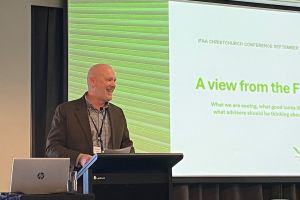
FMA outlines its latest expectations for advisers
Advisers can probably be forgiven for believing the ‘goalposts’ keep shifting, because they probably are, and there is a likely explanation for that, it’s called “prevalence-induced concept change”, a term coined by Harvard researcher Daniel Gilbert.
Also called the ‘Blue Dot Effect’, this is a psychological tendency for humans to invent new risks, or expand existing minor issues into major ones, in the absence or reduction in the incidence of real threats.
As real threats diminish, our brains tend to look for and redefine what threats are, making us see problems where there might be none, essentially making ‘mountains out of molehills’. Evolution has hard-wired us to expect threats regardless of whether there are any.
As Daniel Gilbert says “Solving problems causes us to expand our definitions of them. When problems become rare, we count more things as problems”.
18 hours ago Steve Wright
FMA outlines its latest expectations for advisers
Advisers outline their latest expectations for FMA
Advice firms are raising the bar for their expectations of the FMA, warning that having vague requirements and constantly increasing expectations is no longer going to be tolerated.
Adviser told FMA’s Michael Hewes that Advisers expect the FMA to demonstrate their systems are working, not by having systems that work, but by having records that show they do. So far their records is one adviser was found in a monitoring visit that lost their registration. Hundreds of monitoring visits, lost of angst and censures and chest puffing but the record currently stands at one.
For advisers, the message from the FMA is not to create more paperwork. It’s to make sure a client file clearly has the paperwork that shows why advice was given and how conflicts were managed, and whether the client understood the recommendation. Advisers make the paperwork to meet these requirements, and now we’re being criticised for creating the extra paperwork. We have noticed and adage when they go though and engage with entites: don’t talk to us about our management issues, we want to talk about yours.
Mr Hewes says the FMA recognises the significant work advice firms have done since the new regime was introduced, including rebuilding advice processes, policies and professional standards. Advice firms say they appreciate the recognition of the significant time and cost and effort that went into all that, which means that the shifting of goalposts to ever increasing requirements shows the FMA has no idea how significant that work was.
Advisers say that good advice is what we have always provided and that we know it starts with the client, and always did. Regulation did not change that, it just added a ton of paperwork and record keeping and costs that made it harder to spend quality time with those same clients. In fact advice firms strongly resent the insinuation that our advice process starts with a product before a client.
FMA says it believes in advice.
Advisers believed in advice before the FMA existed.
2 days ago agressively passive
[OBITUARY] Ross Collett: A true insurance adviser legend
Rest in peace, Ross.
6 days ago Yatin Chaudhary
FMA outlines its latest expectations for advisers
With FMA leadership in a crisis it challenges their credibility. Unfortunately the financial advice team has very little industry knowledge, including its leadership, and it shows.
Hewes and his team need to rebuild confidence through substantive dialogue with FAPs, not merely through public relations at a conference.
When will Hewes and his FA team publish appropriate evidence of progress and be independently accountable for their effectiveness?
The majority of FAPs maintain full compliance and high quality advice regardless of the regulator’s difficulties. We continue to engage professionally, factually transparently. I’m not sure thats reciprocated.
6 days ago JB
FMA outlines its latest expectations for advisers
I think they need to try even harder to make it harder and to create adviser confusion. Perhaps a thematic? The regulator is not the client. We have to demonstrate we are creating "good client outcomes", not, they have to demonstrate that we are not. Its like if I am pulled over for speeding then told I have to demonstrate I wasn't speeding.
How is the FMA doing with employment regulation?
Sometimes I feel that they are hanging around with a solution looking for a problem.
Most serious advisers who have been in this industry for some time and are established business professionals understand how good advice is delivered and how a good practice is run. Maybe the FMA needs a tone check and focus on obvious offenders.
I do agree at times "narrow" scope (or what was previously called, limited advice) is sensible.
1 week ago Backstage