Modern-Day demands of income protection
Continuing my exploration of disability cover. Something that has been highlighted with both my own personal claims and the extensive number of claims with clients is that modern demands on disability coverage don't match client reality as well as we think.
Wednesday, August 27th 2025, 2:00PM
by Jon-Paul Hale
Two things that I have observed are incongruent with the needs of clients.
- How the back-to-work process and expectations operate
- How '50s home life continues to influence expectations.
The first is a commercial reality of claims management driven by medicine.
There appears to be an expectation among clinicians that people recover and return to work at the same rate. Which claims follow as their only guide, and this is where the commercial aspect of mitigating claims comes into the picture.
This is a patently flawed line of thinking that is not being considered, and I haven't found any research to support it, indicating that it's not even considered within the sacrosanct approach of medicine.
The same medical system that is now only just realising that clinically testing HRT therapy for women on men and expecting it to apply is deeply flawed! Yes, there are many examples where the research has ignored the gender of the condition receiving treatment with the research.
This attitude contributes to and flows into the second issue: policies and approaches are predicated on homes from the '50s. Where there is a wife at home taking care of things, and it's the bloke who's disabled.
We may have moved past this with society, but we haven't updated our insurance polices to account for this.
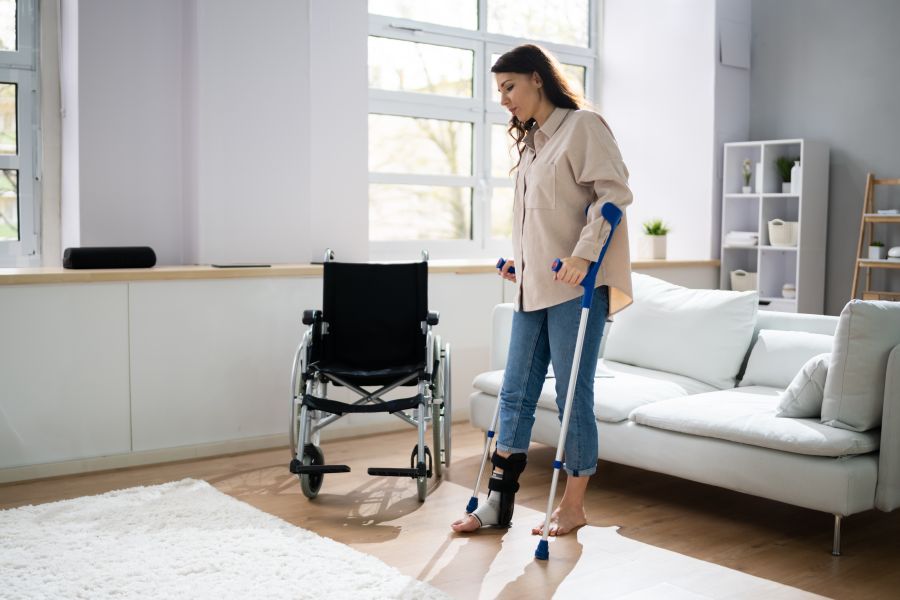
Personally, this was highlighted to me when I injured my knee in 2022. ED determined I was ok, issued me with crutches and sent me packing. No thought to how I was getting home, where I lived, and what possible risks I might face.
At the time, I was living alone in a three-level home with stairs, and I could barely walk. Umm, how exactly is that not going to end in disaster?
Now I was aware enough to manage this, but someone less familiar with medical risk might not have. What about the older people who are alone and don't have the physical strength I have? A disaster waiting to happen.
This is an example of the shortsightedness of the medical system, which also applies to disability coverage.
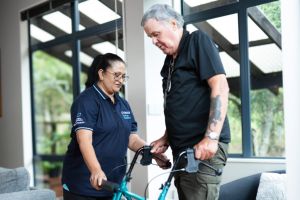
With my client's disability claims, I've had quite a number that have been single, living alone, and the constant theme that has come from them is the lack of a "wife" at home. The "wife" at home that ACC and insurance expect to be there, providing help and support. ACC even states this as the expectation of natural care.
Fine if you have a live-in partner or live in the 1950s, but we're not there anymore. Relying on flatmates and neighbours is the modern equivalent, especially when people are alone in a city away from their extended family.
Clients with disabilities that prevent them from getting groceries, mowing the lawn, cleaning the house, cooking, to name a few.
Without a "wife", who picks this stuff up?
I'm including all genders here ;)
Yes, the logical answer is people pay for these things. At the same time, for those who are single-income and on disability claim, this is both an increased cost, and at the same time, they have a drop in income. Remember that disability cover is a percentage of gross income, providing a financial incentive to return to work.
This is where the rub lies between insurers claiming that disability claims are hurting and people are being "overpaid" versus the adviser's view that there'sn't enough compensation for the situation the client has.
Sure, we can sit in judgment about what people do with their money, but that's actually not our role, and more often it is unhelpful to getting the desired outcome.
A high-income earner who has, say, a $25,000 per month benefit, to a claim administrator making $60-80k per annum, looking at the numbers and wondering what they do with their money. (Not that I know what claims admin get paid)
Yet that same claimant may have had life set up on an income in the millions per annum, and $25k isn't cutting it, but it was all they could get at the time for whatever reason.
As I said, it is not our role to judge; it is our role to identify and solve the problems as best we can.
I presently have a client on personally earned income that can only insure 21% of their income. Yes, they are at the maximum they can get.
We are seeing statistics showing growth in single-person households, and our products need to adapt to the market accordingly.
Home help benefits, perhaps as an additional option, could be added to policies that cover these extra costs.
- Potentially as an add/remove approach like a GP benefit.
- Where there is a partner or family member who can assist, the option can be dropped off.
- Where there is a loss of a partner or family member, and support disappears, the option can be added.
Maybe this is with a menu of services:
- Home help; in-home support, cooking, cleaning, etc. $200-400 per week benefit.
- Around-home support, lawns, ground care and car wash. +$100-200 per week.
- Around town help, shopping and external errands. +$100-200 per week.
These don't have to be significant values, more that they are meaningful values for the costs being experienced.
The underlying underwriting applied, loadings/exclusions, with a tiered premium approach for the relevant benefit options.
This is a different approach to the existing full-time medical care provisions in disability coverage, which only respond to full-time medical care.
Building on my class 5 hobby horse, this could be the basis of a better approach to class 5 disability coverage as well.
- Take a specific condition cover approach, and add where the resulting capacity impact reduces the life assured's ability to perform these activities, the cover responds...
Food for thought: our products can be a bit of a square peg in a round hole for many situations, and options help improve the quality of client review discussions.
Rather than more variations to trauma cover or playing with labels on benefits, updating options to reflect the changes in society we have would be more beneficial.
The days of life and trauma being the only answer are way behind us, with disability and medical covers mitigating much of the old advice around defining large trauma cover benefits.
A well-rounded, comprehensive plan for clients is more adaptable to change, responsive to a broader range of risks, and surprisingly affordable when structured to client needs.
Broader, tailored advice also comes with better training and more detailed advice tools, rather than plain old sales. That CPD thing the revised code is talking about ;)
| « Should FAPs be accepting signature-less policy processing | Trauma Cover: Are we thinking things through or just doing what we have always done? » |
Special Offers
Comments from our readers
No comments yet
Sign In to add your comment
| Printable version | Email to a friend |